
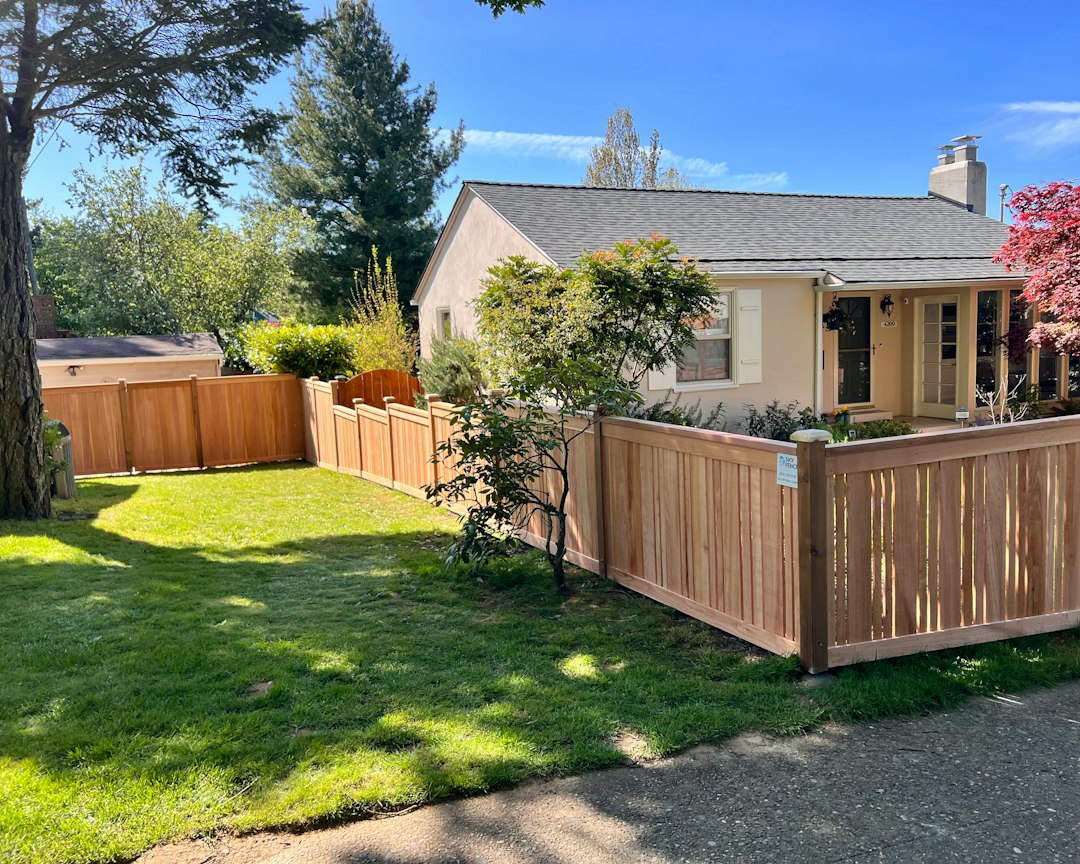
There is a lot of advice about getting a house ready to sell. Fresh paint, tidy rooms, clean windows and a well-kept front garden usually feature near the top of the list. Yet one of the first things I look at when visiting a property is the condition of the boundary fencing. A leaning fence, rotten gate or row of mismatched panels can make an otherwise well-maintained garden look neglected. In my experience, homeowners often underestimate how much a poor boundary affects the appearance of their property. That is why checking the condition of your garden fencing in York should be part of preparing a home for sale, particularly if the garden is one of the property’s main selling points.
I have worked on plenty of gardens where the house itself was immaculate, but the fencing told a different story. The lawn had been cut, the patio pressure washed and the flower beds weeded. Then, along the back boundary, there would be three different styles of panel, a gate hanging at an angle and a post that had clearly been leaning for years.
It might not seem like a major issue to the person who has lived there for twenty years. They know the fence is still standing and have become used to how it looks. A potential buyer sees something different. They see a job that needs doing, and possibly an expense they will have to deal with shortly after moving in.
That does not mean every weathered fence needs replacing before a house goes on the market. Quite the opposite. Some of the best improvements are small, inexpensive repairs that make the whole garden look better cared for.
Buyers Notice the Jobs They Will Inherit
People viewing a property are trying to imagine what living there would be like. They are also looking for problems, even if they do not consciously realise it.
A cracked paving slab might be easy to overlook. A fence leaning towards the neighbour’s garden is harder to ignore.
It raises questions.
Will it survive another winter? Who owns it? How much will replacement cost? Will the neighbour contribute? Is the garden secure enough for children or pets?
None of these questions is especially difficult to answer, but they introduce uncertainty at a point where the seller wants the property to feel straightforward.
A well-maintained boundary removes one potential concern. It makes the garden look complete and gives buyers fewer reasons to start calculating repair costs while walking around.
I would not claim that replacing a fence automatically increases a property’s value by a particular amount. House prices depend on far too many factors for that. What I would say is that an obviously neglected fence can weaken the impression created by an otherwise attractive garden.
That is worth considering before spending money on decorative improvements.
The Fence Does Not Have to Be Falling Down to Look Bad
Some of the worst-looking boundaries I have seen were still structurally sound.
They simply looked as though nobody had paid attention to them for years.
One panel might be dark brown, another faded grey and a third bright orange from a recent coat of treatment. There may be a replacement gravel board that does not match the others, or a section where somebody has nailed extra timber across the front to cover damage.
These things happen naturally over time. Fences need repairs, and homeowners often replace individual sections as necessary.
The trouble comes when the accumulated repairs make the garden look untidy.
Before putting a property on the market, I would stand at the back door and look at the fence as a whole. Forget the individual panels for a moment. Does the boundary look reasonably consistent? Are the tops aligned? Is the gate straight? Are there obvious gaps or broken boards?
Sometimes a thorough clean and a suitable timber treatment can improve the appearance considerably.
Other times, replacing two badly damaged panels is enough to make the entire run look better.
There is rarely a need to spend thousands simply to make an old fence look brand new.
Privacy Has Become a Bigger Part of Garden Appeal
One thing that has changed over the years is how people expect to use their gardens.
A garden is no longer viewed purely as somewhere to hang washing or keep a shed. Many homeowners want outdoor seating, space for children, somewhere to work during warmer weather or simply a quiet place to sit without feeling overlooked.
That makes privacy an important consideration during property viewings.
York has a mixture of housing where this can be particularly noticeable. Older terraces around South Bank and Holgate often have relatively narrow gardens, while some newer developments have properties positioned close together.
In both situations, the fencing can influence how private the garden feels.
A low or badly positioned fence may leave seating areas exposed to neighbouring windows. Gaps between panels can also become more obvious when somebody is viewing the garden for the first time.
The answer is not necessarily to install the tallest fence possible.
In a small garden, a solid six-foot boundary on every side can reduce light and make the space feel enclosed. Sometimes a combination of fencing, planting and carefully positioned screening works better.
I would always consider where people are likely to sit and which parts of the garden genuinely need privacy.
There is little value in blocking sunlight across the entire garden to screen one particular view.
A Leaning Fence Suggests More Than a Cosmetic Problem
If there is one fencing issue I would address before selling a property, it is a visibly leaning boundary.
A fence can lean for several reasons. Rotten timber posts, inadequate foundations, ground movement and repeated wind exposure are among the most common.
Occasionally, the problem is relatively minor. A single post may have failed while the surrounding panels remain in good condition.
In other cases, several posts are moving together and the whole run has lost its strength.
The difficulty for a buyer is that they cannot easily tell the difference.
They see a leaning fence and may assume the entire boundary needs replacing.
That assumption could be wrong, but it still influences how they view the property.
This is where a proper inspection makes sense. If the problem can be resolved by replacing one or two posts, it may be worth doing before viewings begin.
A sound repair also gives the seller a straightforward answer if questions arise about the boundary.
Leaving the fence leaning and hoping nobody notices is rarely a convincing strategy.
Garden Gates Can Make a Property Feel Neglected
I have a particular dislike of gates that need lifting to close.
You know the type. The latch no longer lines up, the bottom catches on the paving and somebody has tied a piece of string around the post to keep it shut.
The homeowner has probably been doing this for years without giving it much thought.
A buyer notices immediately.
A poorly functioning gate can make a garden feel less secure, particularly for families with young children or dogs.
Fortunately, many gate problems are fairly straightforward to correct.
Loose hinges can sometimes be refitted. A worn latch can be replaced. Timber may need adjusting where seasonal swelling has affected the clearance.
If the supporting post has moved, that needs attention first. There is no point trimming a gate to fit a crooked opening if the post is continuing to lean.
For more serious problems, replacing the gate may be sensible. A properly fitted garden gate should open smoothly, close securely and suit the surrounding fencing.
It is a relatively small feature, but people use it regularly. A gate that works properly creates a much better impression than one that needs explaining.
The Problem With Mismatched Fence Panels
Replacing individual fence panels is perfectly normal maintenance.
Storm damage, rot and accidental damage rarely affect every panel at once, so there is no reason to replace an entire fence whenever one section fails.
However, a garden can gradually end up with several different panel styles.
You might have traditional lap panels along one side, closeboard fencing at the rear and a decorative panel added later for privacy.
There is nothing inherently wrong with mixing materials. Some gardens benefit from it.
The problem is when the changes appear accidental.
A single bright new panel between five heavily weathered ones can stand out. So can a replacement panel that is noticeably shorter than its neighbours.
If you are preparing to sell, consider whether the boundary could be made more consistent without replacing everything.
Sometimes treating the timber in a similar colour helps. In other cases, a small number of matching replacement panels may be worthwhile.
I would avoid installing cheap decorative panels simply because they look attractive in a catalogue. The fence still needs to suit the property and withstand the conditions.
A tidy, conventional boundary often looks better than an elaborate design that does not fit the garden.
Do Not Ignore the Bottom of the Fence
Most people look at fence panels from the middle upwards.
I tend to look at the bottom first.
That is where many problems begin.
Timber in constant contact with damp soil can deteriorate, particularly where leaves, compost or raised beds trap moisture against the boards.
A fence may look sound at eye level while the bottom rail has started rotting.
Gravel boards help protect the main panels by keeping them clear of the ground. If the gravel boards are damaged or missing, replacing them may extend the useful life of the fencing.
Concrete gravel boards can be particularly useful in damp locations, provided the supporting posts and installation are suitable.
York’s ground conditions vary, but gardens with heavy clay or poor drainage can remain wet for long periods during autumn and winter.
If the bottom of a fence is constantly sitting in damp soil, simply applying another coat of treatment will not solve the underlying problem.
Before selling, clear accumulated leaves and soil from the base and check whether the timber remains sound.
It is a small maintenance job that can reveal issues before they become more expensive.
Boundary Questions Can Make Buyers Nervous
A fence does not necessarily mark the exact legal boundary of a property.
This is particularly relevant in older neighbourhoods where boundaries may have changed over time or where previous owners installed fencing without much thought about the precise position.
I have encountered gardens where a fence was installed slightly inside the owner’s land to avoid an old wall or tree.
Years later, somebody assumes the fence itself defines the property boundary.
That can create confusion.
If a buyer asks who owns a particular fence, it is better to have a clear answer than rely on assumptions.
There is a common belief that homeowners are automatically responsible for the fence on one particular side of their garden. That is not a dependable rule.
Title documents, previous agreements and the circumstances of the boundary may all be relevant.
Where ownership is uncertain, it is worth checking the available property records and seeking appropriate advice if necessary.
A fencing contractor can assess the physical condition of a boundary, but should not pretend to settle a legal ownership dispute.
If you are planning to replace fencing before selling, establish that you have the right to carry out the work.
The last thing a seller needs is a disagreement with the neighbour just as the property goes on the market.
Should You Replace the Whole Fence Before Selling?
This is probably the most useful question to ask.
And my answer is usually no, unless the condition genuinely justifies it.
A full fence replacement can be a substantial expense, particularly where access is difficult, old concrete needs removing or the garden has uneven ground.
If the existing fencing is structurally sound, there may be little financial benefit in replacing it solely for appearance.
A buyer might prefer a different style anyway.
I have seen perfectly good fencing removed because the new owner wanted composite panels, decorative screening or a different garden layout.
That is why I would focus first on safety, condition and basic presentation.
If the posts are sound and the panels have several useful years remaining, clean them, carry out necessary repairs and leave them alone.
If several posts are rotten, the rails are failing and the fence is likely to collapse during the next storm, replacement becomes a more reasonable consideration.
A professional assessment of fence repairs can help establish whether targeted work will be enough.
The aim should be to spend money where it solves a genuine problem, not simply because a new fence looks appealing.
The Front Boundary Deserves Attention Too
Most fencing discussions focus on rear gardens, but front boundaries play an important role in how a property looks from the street.
A broken front gate, leaning picket fence or neglected boundary can affect the first impression before a buyer even reaches the front door.
This matters in areas of York with traditional terraces and period properties, where low brick walls, railings and timber gates contribute to the character of the street.
I would be careful about replacing original features without considering the style of the house.
A modern solid fence might provide privacy, but it can look out of place in front of a Victorian terrace that originally had a low wall and open frontage.
There may also be planning restrictions, particularly near highways, at listed buildings or in conservation areas.
Often, repairing existing features is preferable to replacing them with something completely different.
A freshly painted timber gate, repaired wall or neat low fence can improve the entrance without changing the character of the property.
What About Composite Fencing?
Composite fencing is sometimes suggested as an upgrade before selling because it offers a modern appearance and generally requires less routine maintenance than timber.
It can be an excellent material for the right property.
But I would be cautious about installing an expensive composite system purely in the hope of increasing the sale price.
Composite fencing costs vary depending on the system, post type, installation requirements and site conditions. The initial cost is generally higher than basic timber panel fencing.
Some buyers will appreciate the lower maintenance requirement. Others may prefer traditional timber or intend to redesign the garden themselves.
There is no guarantee that the additional expenditure will be recovered through the sale.
If the existing fence is beyond repair and the property has a contemporary garden design, composite may be worth considering.
If the timber fence is sound and only needs minor maintenance, replacing it with composite is unlikely to be my first recommendation.
Spend according to the condition of the property, not assumptions about what every buyer wants.
Winter Viewings Can Expose Neglected Fencing
There is a seasonal aspect to this that sellers sometimes overlook.
During summer, gardens are full of greenery. Climbing plants cover old panels, shrubs hide damaged posts and flower beds draw attention away from the boundary.
By late autumn, much of that cover disappears.
Suddenly, the fence becomes far more visible.
A buyer viewing a property in November or January may see problems that would have been hidden by foliage during July.
Wet weather can also make certain defects more obvious.
Rotten timber becomes darker. Loose posts move in softened ground. Poor drainage leaves standing water along the boundary.
This is why autumn is a sensible time to inspect fencing, particularly if the property will be marketed during winter or early spring.
I would check the posts, rails, gravel boards and gates before arranging photographs or viewings.
There is no need to panic about every weathered board. Just deal with the issues that are likely to cause concern.
A Well-Maintained Garden Feels Easier to Own
One thing I have noticed over the years is that buyers often respond well to properties that appear straightforward to maintain.
That does not mean every garden needs to be immaculate.
Some people love mature planting, traditional timber fencing and established borders. Others prefer low-maintenance paving and composite materials.
The common factor is whether the garden appears cared for.
A fence with sound posts, secure panels and a working gate suggests that somebody has kept on top of maintenance.
A boundary held together with temporary brackets and odd bits of timber suggests the opposite.
It is not always a fair judgement. A homeowner may have maintained the rest of the property extremely well.
But buyers make assessments based on what they can see.
Visible maintenance problems can lead them to wonder what else might need attention.
That is another reason to tackle obvious defects before the first viewing.
The Repairs I Would Prioritise Before a Property Goes on the Market
If somebody asked me to inspect their garden before selling, I would not start by recommending new fencing.
I would look for a few specific problems.
First, anything unsafe or unstable. Loose posts, panels at risk of falling and gates that cannot be secured properly should be dealt with.
Next, obvious damage. Broken boards, missing gravel boards and badly split rails can often be repaired without replacing the entire boundary.
Then I would look at appearance. Mismatched panels, peeling finishes and excessive vegetation can make the garden seem less maintained than it really is.
Finally, I would consider privacy and access. A gate that does not close or a large gap in the boundary may be a particular concern for buyers with children or pets.
The order matters.
There is little point spending money staining timber if the posts underneath are rotten.
Equally, replacing a perfectly sound fence because the colour has faded is usually unnecessary.
A sensible repair plan should address the structure first and the appearance second.
Do Not Spend Money Just to Impress an Estate Agent
There is a temptation to treat every suggestion made before selling as something that must be done.
Paint the walls. Replace the carpets. Tidy the garden. Install new fencing.
Before long, the preparation costs become substantial.
Some improvements are worthwhile. Others may not return enough value to justify the expense.
I would always separate necessary repairs from optional upgrades.
A dangerous fence needs attention regardless of whether the house is being sold.
A sound fence that has weathered to a natural grey probably does not need replacing.
A damaged gate that leaves the garden insecure may be worth repairing.
An expensive decorative fencing system is a matter of preference.
If the property is likely to be sold to somebody planning major renovations, spending heavily on garden improvements may be particularly difficult to justify.
There is no point installing a new fence that the next owner intends to remove.
The best approach is to make the garden safe, tidy and presentable without trying to predict every buyer’s taste.
The Fence Is Part of the Property, Not Just the Garden
After years of working on residential boundaries, I have come to see fencing as one of those features people barely notice until something goes wrong.
A good fence quietly does its job. It provides privacy, defines the garden, keeps pets contained and gives the outdoor space a finished appearance.
A bad fence draws attention for all the wrong reasons.
For sellers, the aim should not be to create a show garden at any cost. It should be to remove obvious problems that might distract buyers or make them worry about future repairs.
Sometimes that means replacing several posts. Sometimes it means repairing a gate, fitting a new gravel board or cutting back an overgrown hedge.
And sometimes, after a proper inspection, the best advice is to do very little.
I would much rather tell a homeowner that their existing fence has another five years of useful life than persuade them to spend money replacing something that does not need replacing.
Before putting a property on the market, walk to the bottom of the garden and look back towards the house. Check the fence line, the gate and the condition of the timber. Try to see the boundary as somebody visiting for the first time would see it.
If something looks neglected, find out whether it needs a repair or simply a bit of maintenance.
A garden does not need brand-new fencing to appeal to buyers. It needs a boundary that looks sound, works properly and does not leave the next owner wondering what it will cost to put right.
The Short Version
- The condition of boundary fencing significantly impacts the overall appearance and perceived maintenance of a property for potential buyers.
- A well-maintained garden boundary can alleviate buyer concerns about future expenses associated with repairs.
- Homeowners may overlook neglected fencing, but it can create doubts for potential buyers about the property’s upkeep and security.
- Inconsistent fencing colors and repairs can make a garden look untidy, even if the individual panels are structurally sound.
- Privacy has become an important consideration for gardens, with the type of fencing influencing the perceived seclusion of outdoor spaces.
- A leaning fence can indicate deeper structural issues, making it a critical concern to address before selling a property.